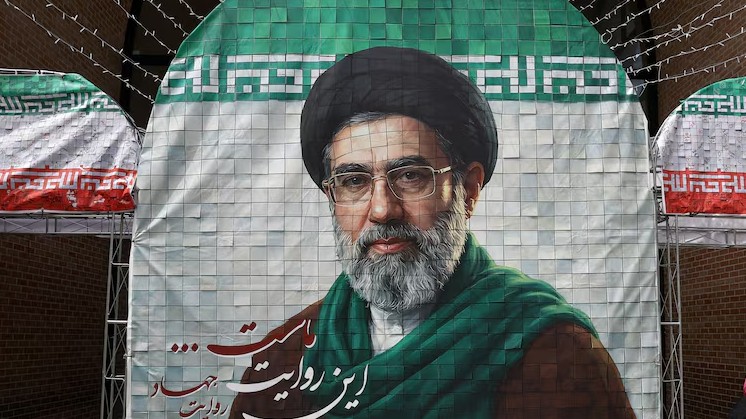
The Kabul Tribune (KT) — Reuters reported that Iran’s supreme leader has ordered that the country’s near-weapons-grade uranium stockpile must not be sent abroad, according to two senior Iranian sources, a move that hardens Tehran’s position in ongoing peace negotiations with the United States.
The directive, attributed to Mojtaba Khamenei, could
complicate diplomatic efforts and further frustrate U.S. President Donald
Trump, who has insisted that Iran must relinquish its highly enriched uranium
reserves as part of any agreement.
“We will get it. We don’t need it; we don’t want it. We’ll
probably destroy it after we get it, but we’re not going to let them have it,”
Trump told reporters at the White House.
Israeli officials, cited by Reuters, said Trump has assured
Israel that Iran’s enriched uranium stockpile — considered essential for
producing nuclear weapons — would be removed from the country under any
potential deal.
Western nations, including the United States and Israel,
have long accused Iran of seeking nuclear weapons, pointing to its uranium
enrichment levels reaching up to 60%, closer to weapons-grade levels. Iran has
consistently denied pursuing nuclear arms.
Benjamin Netanyahu said the conflict would not be considered
over until Iran’s enriched uranium is removed, its support for proxy groups
ends, and its ballistic missile program is dismantled.
According to the sources, Iranian officials believe
exporting uranium would leave the country vulnerable to future attacks by the
United States and Israel, reflecting deep mistrust toward Washington.
A fragile ceasefire remains in place following a conflict
that began on February 28 with U.S.-Israeli strikes on Iran. However, no major
breakthrough has been achieved in peace talks, which are further complicated by
a U.S. blockade of Iranian ports and tensions over the Strait of Hormuz.
Iranian officials also expressed concern that the pause in
hostilities could be a tactical move by Washington before resuming military
action. Iran’s chief negotiator, Mohammad Baqer Qalibaf, warned that recent
developments suggest preparations for new attacks.
Despite narrowing differences on some issues, significant
disagreements remain over Iran’s nuclear program, particularly regarding its
enriched uranium stockpile and Tehran’s demand for recognition of its right to
enrichment.
Iran maintains that its priority is securing a permanent end
to the war and guarantees against future attacks. Only after such assurances,
officials say, would Tehran engage in detailed nuclear negotiations.
The International Atomic Energy Agency estimates that Iran
possessed about 440.9 kilograms of uranium enriched to 60% before recent
strikes on its nuclear facilities. The agency believes a significant portion
remains stored at sites in Isfahan and Natanz.
IAEA chief Rafael Grossi previously said much of the
material is held in underground facilities, though the exact amount remaining
is unclear.
Iran says some enriched uranium is required for civilian
purposes, including medical applications and research reactors.